
I initially planned to attend this event onsite, but since my mom was experiencing some dizziness, I decided to join virtually instead. via YouTube Live, and while I'm not certain if I've managed to catch all of the day's sessions, I'll try my best to jot down as much as I can.
Note: For Thai Version you can see my blog "สรุปงาน FOSSASIA 2026 Community Day"
Table of Contents
Beyond the Blinky LEDs: Teaching How to Think Like an Engineer+
Speaker Shirley L.
The key point of this session is to stop and think before just following 'How-to' guides or 'Cookbooks.' We should aim to get more than just the result. Because those guides only show the 'Steps,' not the 'Why.' Sometimes, encountering a few obstacles or slight challenges in the learning process is actually a good thing.
Follow Instruction != Learning
📌 For those who want to share or create tutorials like this:
- Be upfront about potential "Side Quests" (obstacles): Many How-tos/Cookbooks tend to be all "Easy," like Clickbait. Warn them beforehand about what hurdles they might face.
- Explain the "Why": Why do it this way? Actually, if you come across a tutorial that doesn't explain the "why," you should question it.
- Share Failure Paths: Share the experience of where it went wrong (the pain points) and what ideas were used to solve it. You can find clues via Keywords > Git Issues, etc.
- Add Side Quests: Besides copy-pasting, encourage people to try other approaches. Maybe start by changing small values or try implementing it differently.
- Give Back: Finally, when you solve the problem, don't forget to share back to the source or make a Pull Request. For example, the speaker tried playing with the Temperature Dashboard and found outdated documentation/libraries, so they fixed it to make it work.
How to Foster Students as Open Source Software Developers
Speaker Jun Iio
📌 For those who want to contribute back to Open Source: A speaker came to share their approach:
- Visualization: Students are required to build an app to visualize their own research work. They're also encouraged to experiment with various platforms available to them as students, such as cloud credits and other academic resources.
- Shift to a Collaborative Model: Traditionally, students submit work to their advisor for review, and that's the end of it. Moving forward, the work is published to Git as Open Source, allowing for review and feedback not just from lab members, but from the wider developer community.
📌 Benefits of this approach: This helps build Literacy and Citizenship in multiple dimensions:
- Software Engineering skills: Git, Web Apps, Documentation, and understanding Open Source licenses.
- Responsibility: Students learn to publish working, functional code to Git. This also creates a reliable foundation for future students or contributors who build upon their work, ensuring they start from something that actually works.
Getting Started with Google Summer of Code: What It Is, Why It Matters, and How to Join
Speaker Stephanie Taylor
📌 Google Summer of Code (GSoC) is an online open-source program with the primary goal of attracting New Contributors to open-source software development, under the guidance of Mentors from various Open Source Communities around the world.
📌 The program is now in its 22nd year, making it one of Google's longest-running initiatives.
📌 How it works: Participants contribute to real-world, production-level codebases. There are 3 project sizes to choose from:
- Small: 8 weeks
- Medium: 12 weeks
- Large: 12 weeks or more
The timeline is flexible to ensure participants have adequate time for rest and other commitments.
📌 Why It Matters:
- Skill Development: Gain hands-on experience with Testing, Version Control, Coding Style, Open Source Licenses, and more.
- Mentorship: Learn directly from experts—whether they are maintainers of the repo you're contributing to. For those who join as mentors, it's a great opportunity to develop coaching and leadership skills.
- Stipend: Yes, participants get paid!
- Confidence & Networking: Build your portfolio and connect with developers worldwide.
Thai Participation: I heard there are 7 Thai individuals involved this year, though I'm not entirely sure if they are mentors or contributors—but either way, it's exciting!
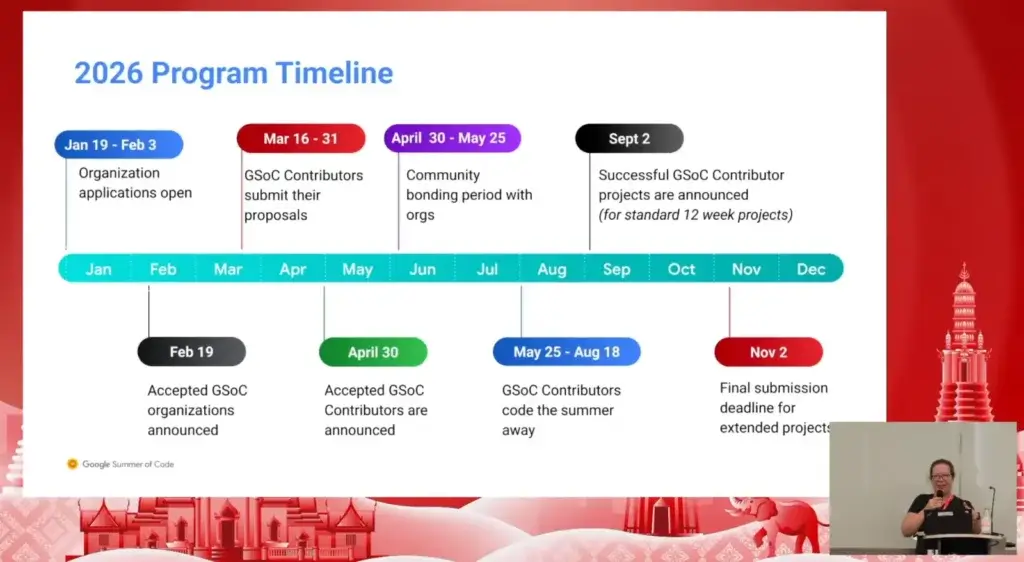
📌 How to Join:
- Eligibility: You must be 18 years or older, or be a beginner in open source with less than 2 years of contribution experience.
- Choose the Right Project: Pick a project that matches your skills and interests. Consider:
- Programming Languages: Python, C++, C#, etc.
- Fields of Interest: Data Science, AI, Web Development, etc.
- Check Your Availability: Make sure your schedule aligns with the program's timeline and deadlines.
- Reach Out to Organizations: Connect via their communication channels (Discord, Slack, etc.). Introduce yourself, express your interest, and start discussing your project proposal.
Resource : https://summerofcode.withgoogle.com/
Create your future with certification
Speaker Kenji Ito
📌 According to survey reports, the three main motivations for pursuing IT certifications are:
- Career Advancement (Promotion)
- Skill Development (Skills)
- Resume/CV Enhancement
📌 Investing in certification should yield a return — here's the ROI of getting certified:
- From the Employee's Perspective:
- Salary Increase: Most see a 6–10% bump, though in some regions it can reach 11–20%.
- New Opportunities: Certifications can help with promotions or make it easier to land a new job. - From the Employer's Perspective: Access to employees with verified, up-to-date skills.
📌 Linux Professional Institute (LPI)
- A non-profit organization founded in 1999 in Canada.
- A community-driven certification model that invites the community to participate in exam development—similar to the Open Source philosophy.
- ~200,000 active certification holders worldwide. / Exams available in 10 languages.
- Free learning resources on their website, available in both PDF and online formats.
- Three Certification Levels:
1. IT Essentials: Foundational knowledge in Open Source.
2. Linux Professional: Includes the popular LPIC-1 and LPIC-2 certifications.
3. Open Technology: Specialized exams for engineers, covering Kubernetes, BSD, and other systems.
Additionally, OpenEDG offers certifications in other areas beyond Linux, such as Python and JavaScript.}
P.S. It seemed like they were handing out codes at the event—if you attend on March 9–10, try visiting their booth to ask!
Recommend Open Source apps to a new user
Speaker Preetam Rai
This was an Interactive Session where everyone brainstormed and shared Open Source tools together. I've tried to jot down and categorize them below—hope I got everything right!
📌 Operating Systems
- Linux (Various Distros): Ubuntu, Fedora, Debian, Arch, etc.
- GrapheneOS: A privacy-focused mobile OS for smartphones.
📌 Browsers
- Firefox & Brave: Privacy-conscious mainstream browsers.
- Zen Browser: A Firefox-based browser featuring vertical tabs as a standout capability.
- Tor Browser: Designed for high anonymity and identity protection.
- LibreWolf: A Firefox fork focused on privacy and security.
📌 Office Suite (for general document work) LibreOffice / OpenOffice / OnlyOffice (Integrated AI Model Via API (Open Source Model / Cloud Model) Use like ms copilot
📌 Note-taking
- Joplin: Supports end-to-end encrypted sync across devices.
- Logseq: Visual, outliner-style notes with Git-based version control.
- Obsidian: Cross-platform with a rich plugin ecosystem for extensibility.
- QOwnNotes: Self-hostable; integrates with OwnCloud / NextCloud.
- My addition: SiYuan – A Notion-like tool from China. Note: Syncing requires purchasing their Chinese cloud service. 🇨🇳
📌 Text Editor / IDE
- Kate: Functions as both a text editor and a lightweight IDE.
- Vim: A powerful, modal editor familiar to many developers.
📌 Graphics & Photo Management
- GIMP: Advanced image editing and retouching.
- Krita: Digital painting; a viable Photoshop alternative in many cases.
- Inkscape: Vector graphics editor, also useful for PCB design.
- Immich: Self-hosted photo backup and management; a great Google Photos alternative.
- ComfyUI: Node-based generative AI workflow tool compatible with LLMs and diffusion models.
📌 Communication
- Matrix: An open protocol that can interoperate with clients like Element, and bridge to Telegram, WhatsApp, or Line.
- Signal: End-to-end encrypted messaging app focused on security.
📌 VPN
- Mullvad VPN: Privacy-first, anti-censorship focused.
- WireGuard: A modern, high-performance VPN protocol.
📌 Multi-Media
- VLC Player: Plays virtually any media format.
- Audacity: Popular open-source audio editor.
📌 Others
- Ente: Privacy-focused suite for photo backup, authenticator, and more; cross-platform.
- Syncthing: Decentralized file sync (photos, documents, passwords) across Linux, Windows, Mac, and Android.
- Home Assistant: Open-source home automation platform.
- Jan.ai: Run local LLMs offline on your machine.
- Bazaar: An App Store-style discovery platform for Linux apps.
Running Snowflakes to help censored people
Speaker Roger Dingledine
At first, I totally mixed up 'Snowflake' with that other data software you might know. But the talk blew my mind—it's actually a privacy tool powered by the TOR Network, helping people in heavily censored areas bypass restrictions and reach the open internet. It basically works like a proxy gateway into TOR. Here's how I understand it:
📌 How It Works: The Technical Architecture
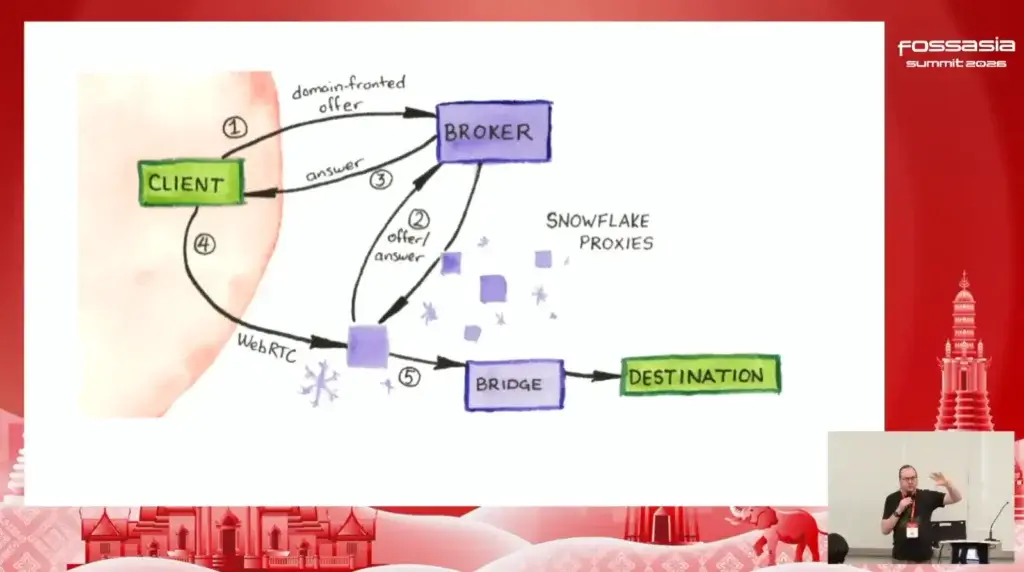
- WebRTC: Makes blocking difficult because it uses the same protocol as popular platforms like Zoom, Google Meet, or Signal. Censors risk breaking these essential services if they try to block Snowflake.
- Snowflake Proxy: Volunteers run these as edge services. They act as the exit channels that relay traffic into the Tor network.
- Broker: The matchmaking service that pairs clients (users in censored regions) with available Snowflake proxies.
📌 Interesting Use Cases: Helping People & Protecting Identities
- Laos: Assisting individuals who have escaped from scam centers or human trafficking operations to safely reconnect with the outside world.
- Thailand: Enabling private, secure discussions during politically sensitive times or periods of social tension. 🇹🇭
- Russia / Iran / China: Helping citizens in regions with severe internet restrictions bypass censorship and access global information.
- ..and hopefully, no one shows up at your door after using it, right? 55555
📌 How You Can Help: Multiple Ways to Contribute
Even if you're not technical, you can still make a difference by running a Snowflake Proxy:
- Browser Extension (Easiest & Most Popular): Install the extension on Chrome or Firefox and let it run in the background.
- Web Page: Simply keep a webpage with the Snowflake JavaScript open. (Note: Some browsers may throttle or block background tabs to save resources.)
- Orbot App (Mobile): Enable "Kindness Mode" in the Orbot app on Android or iOS to share your internet connection as a proxy.
- Standalone Proxy: Run your own proxy server. This requires more technical knowledge and resources (bandwidth, uptime, etc.).
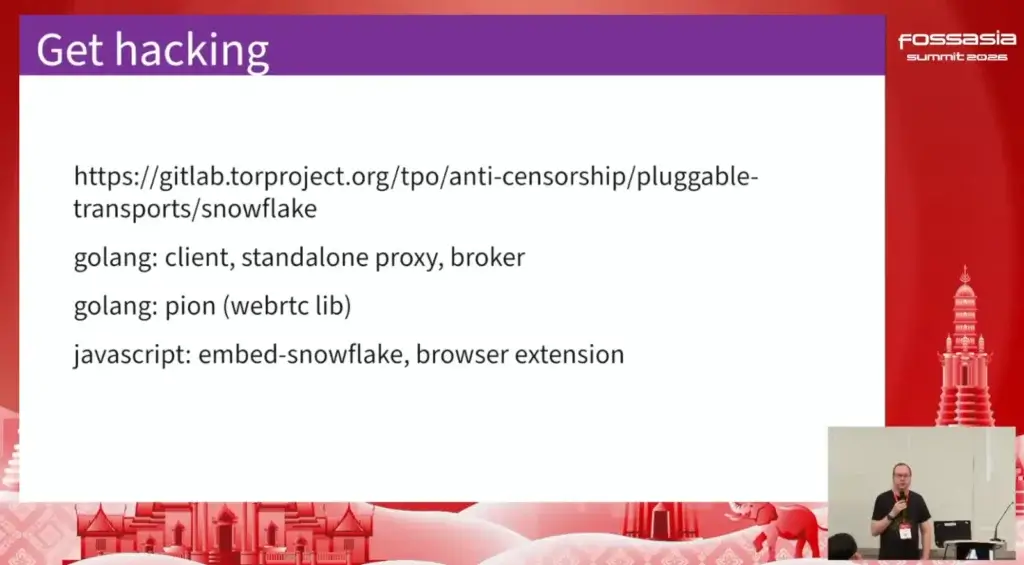
For Developers: Contribute to the Code - If you have coding skills, there are several areas where you can contribute:
- Standalone Proxy (Golang): The Client, Proxy, and Broker components are written in Go. You can also contribute to Pion, the WebRTC library used by the project.
- Browser Extension / Web Page (JavaScript): Help improve the extension or the embedded web widget that runs Snowflake scripts.
To encourage more participation, the project uses gamification that show volunteers the impact of their contribution—like how many people they've helped relay traffic for. This builds a sense of pride and motivates continued involvement.
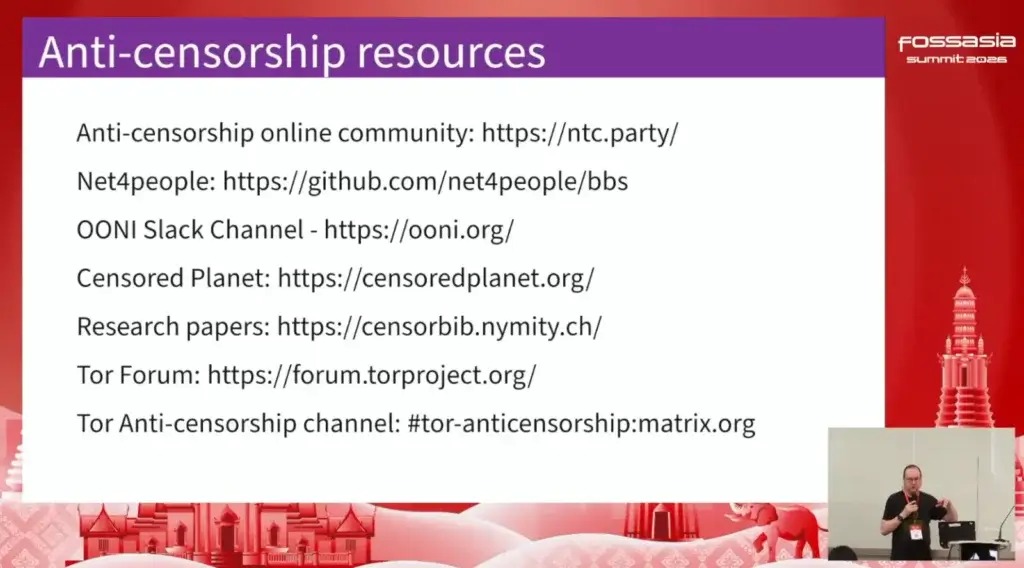
Resource: https://snowflake.torproject.org/
Testing Is Everyone’s Job (and Why That’s Hard)
Speaker Jazmine Calma
📌 Current Challenges in QA (Quality Assurance)
- Testing Happens After Decisions Are Made
- Testing is often performed after the code has been built or already merged into the main branch.
- This makes it difficult to catch issues early, when they're cheaper and easier to fix.
- QA as a "Safety Net"?
- Teams sometimes unconsciously expect QA to bear all the risk—acting as the final gatekeeper who must catch everything.
- This creates undue pressure on QA engineers and can lead to burnout.
- Bug Found → "How Did QA Miss This?" (Blame Culture)
- When a bug slips through, the reflexive question is often "How did QA miss this?" instead of the more constructive:
- "Where did our team process break down?" or "What can we all improve?"
- Shifting from blame to collective ownership is key to building a healthier, more effective quality culture.
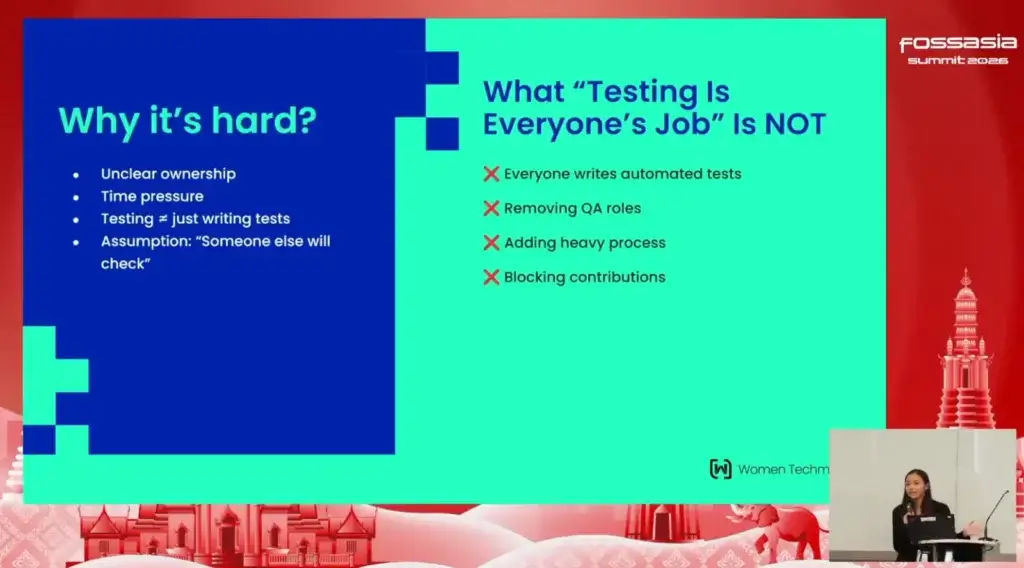
📌 Testing Is Everyone's Job (and Why That's Hard)
- Contributors Have Diverse Skills & Contexts
- Not all contributors (or team members) have the same level of expertise or domain knowledge.
- A fix might solve one problem but unintentionally create side effects elsewhere—because the person making the change didn't fully grasp the broader impact. - Testing Is Often Treated as "Optional"
- When deadlines loom, testing is frequently the first thing to get deprioritized: "We'll test later" or "It works on my machine."
- This mindset turns quality assurance into an afterthought rather than a built-in practice. - No Clear Owner for Quality → "Someone Else Will Catch It"
- When responsibility for quality isn't explicitly assigned, diffusion of ownership happens: "Dev thinks QA will find it," "QA thinks the user will report it."
- Personal anecdote: At my company, this has almost become an unofficial motto from some senior folks: "The customer will test it themselves."
The Consequences - Bugs are discovered late / QA + Team Burnout / Slower Release Cycles
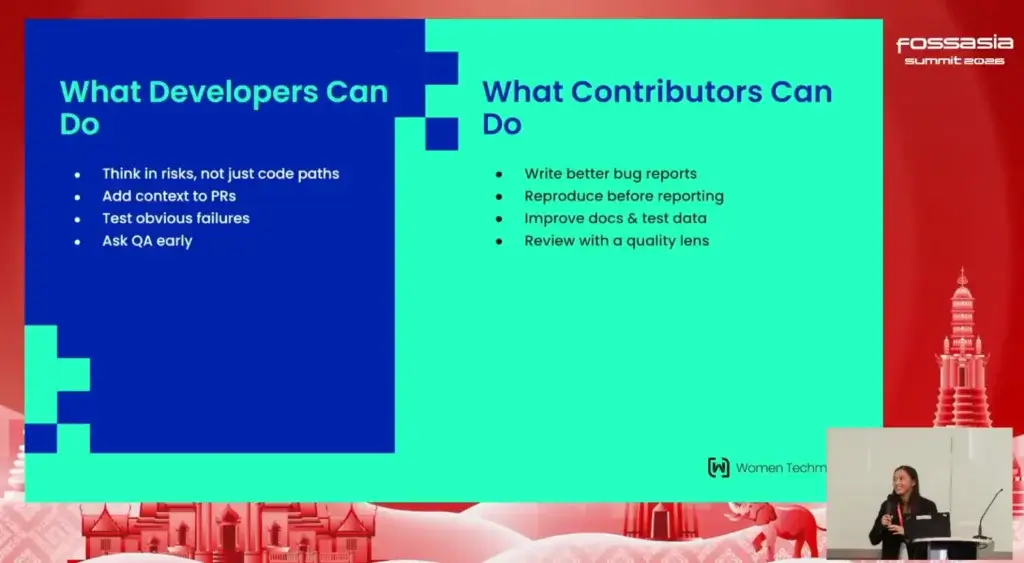
📌 The Key Is Shared Responsibility
- Shift Left: Start Testing Conversations Early
- Discuss edge cases, risks, and test scenarios before coding begins—during planning or design phases.
- This helps catch potential issues when they're still cheap and easy to address. - Risk-Based Thinking
- Focus testing efforts on the areas that would cause the most damage if they failed.
- Ask: "What would hurt most if it breaks?" — then prioritize accordingly. - QA Is Not a Gatekeeper—It's a Coach Instead of being the "blocker" at the end of the pipeline, QA should act as a risk communicator and quality coach who empowers the whole team to build better software.
- What Developers Can Do
- Add clear context in Pull Requests (PRs): Explain the why, not just the what.
- Talk to QA early: Loop them in during design or implementation—not just at the end.
- Test before handing off: Do basic sanity checks locally before sending to QA. Small efforts, big impact.
📌 Q&A Segment: AI & QA (Quick Recap from the Session) During the QA session, questions shifted toward AI—here's my recap of what I caught:
- Will AI replace QA engineers?
- Short answer: No.
- AI still lacks empathy and deep understanding of user needs. It tends to test "happy paths" but misses nuanced edge cases, emotional UX flows, or real-world misuse scenarios. - How does "Vibe Coding" affect code quality?
- "Vibe Coding" = writing code by prompting AI without deep review or understanding.
- Result: More low-quality or superficially working code → which can introduce security gaps, technical debt, or hidden bugs. - Is the surge in AI-generated code a concern for QA?
- Yes—and it makes QA even more critical.
- More code = more surface area for bugs, risks, and security issues.
- QA's role evolves: not just finding bugs, but helping the team critically evaluate what AI or developers might have overlooked.
From Contribution to Coordination: The New Bottleneck in Open Innovation
Speaker Ranida Nuangjhamnong
📌 Contribution & Coordination
- Contribution: Create possibilities — e.g., submitting Pull Requests or building new libraries.
- Coordination: Increase coherence — share ideas, refine them together, and find others with similar pain points.
📌 The larger and more complex the system, the more important Shared Understanding & Context become — so everyone aligns on the project's direction and goals. Open Source already has these mechanisms built-in:
- Maintainers help set the project's vision.
- Pull Requests ensure changes integrate well with the rest of the codebase.
- Discussions in Issues and project Roadmap planning keep everyone on the same page.
📌 Finally: How does your work connect with others? Are there people sharing the same pain points? Share, collaborate, and create impact for the community.
From Blank Page to Dynamic Dashboard: The Art of GitHub Profiles
Speaker Monthira Chayabanjonglerd
📌 Introduction to Building Your GitHub Profile
Get Started: Create a repository named exactly the same as your username + add a
README.mdfile.
📌 Key Components:
- Cover Image: 1000 x 300 px — stuck for ideas? Ask AI for help.
- About Me: Write it yourself, or try a gh-profile-readme-generator if you're blank.
- Website & Social Media: Add links as you like.
- Latest Blog: Use blog-post-workflow to automate updates via GitHub Actions.
- Tech Stack: Grab badges from https://shields.io or Badges4-README.md-Profile.
- GitHub Stats: Use github-readme-stats — recommendation: self-host to avoid PAT rate limits.
- Support / Donate: Platforms like Ko-fi or Buy Me a Coffee provide embeddable code snippets. ☕
📌 P.S. The speaker has a full blog post (In Thai)+ slides available for deeper details!
Hackerspaces as Small-Scale Production and Repair Networks for Low-Cost Open Hardware
Speaker Mitch Altman
📌 Speaker's Story: From Nerdy Kid to Silicon Valley Advisor
A nerdy kid who got bullied, escaped into TV — then had a turning point in 1980 by quitting TV, which freed up energy to pursue his passion: electronics. Gradually evolved into a Silicon Valley advisor and co-inventor of Virtual Reality (VR).
📌 TV-B-Gone & The Power of Open Hardware
- Created TV-B-Gone to mute distracting TVs around him. Initially expected to sell only ~1,000 units in 5 years — but in 2004, it exploded: 20,000 units sold in 3 weeks, eventually nearing 1 million total.
- Key to success: Open Hardware — fully open documentation and build process, enabling countless others to remix and extend the project.
📌 Hacker Conferences & Community Mindset
- First attended Hackers on Planet Earth (HOPE), then many more. Core insight: Community > Power to make something bigger. Start by shifting your own mindset first.
- Hacking, Not about breaking into systems — it's about seeing overlooked resources (even trash) and repurposing them with new ideas.
- Hacking, Applies to any field: art, music, science, education, etc. — through hands-on, project-based, play-driven learning.
📌 Hackerspaces:
- Physical spaces to tinker, collaborate, build confidence, and brainstorm. Casual projects can grow into real-world solutions — even startups with funding.
- Want to start? Check out: hackerspaces.org / Hackerspace Design Patterns / How to Create a Hackerspace
A week in a life with Kubernetes Community - Life as an APAC contributor
Speaker Wendy Ha
📌 Want to Contribute to Kubernetes (K8s)? Here's a Guideline
- Everyone likely knows K8s by now — but if you want to contribute, participation from the SEA region is still relatively low. It's not really about timezone: the K8s team works asynchronously.
- No need to attend every meeting. Most collaboration happens via Slack, GitHub Issues, and Pull Requests (PRs). If you can't join live, you can suggest topics and catch up later.
📌 Understand SIGs (Special Interest Groups) SIGs are groups focused on specific areas of K8s — there are 30+ currently, for example:
- SIG Node: Manages node-related components.
- SIG CLI: Focuses on tooling like
kubectl. - SIG ContribEx: Great for newcomers — includes non-coding tasks like moderating Slack/YouTube or mentoring.
📌 Check SIG Meeting Times & Join What Fits - Once you know the groups, check their active schedules and pick what works for you:
- Tuesday, 16:00 JST: SIG Scheduling (with tech leads present).
- 3rd Tuesday of the month: New Contributor Orientation.
- Friday: SIG Instrumentation (learn about logging, metrics, etc.).
📌 Finally: Connect & Get Involved
- Reach out to CNCF Ambassadors in Thailand or abroad.
- Attend local meetups — e.g., recent CNCG#4 Observability Day in Thailand.
- Or just join the CNCF Slack to start chatting.
Balancing Community Impact and Motherhood: A Journey in Women in Tech
Speaker Punsiri Boonyakiat
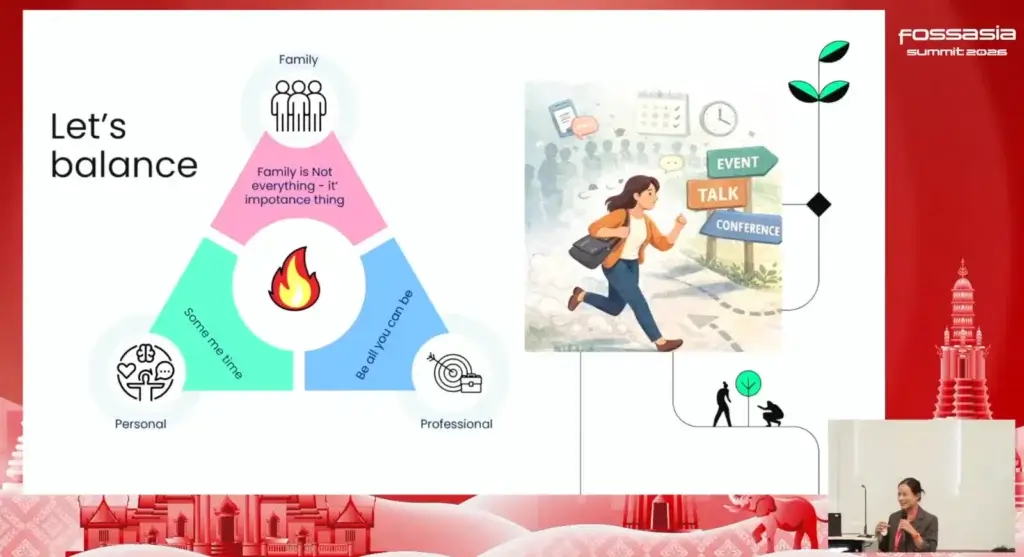
📌 Speaker's Balance: GDE / LINE API Expert / Employee / Mom
Balancing family, work/community, and personal time is essential to avoid burnout.
- Seasonal Best Contribution: Allocate time flexibly — contribute when it fits your season, not constantly.
- Manage Your Strength: Choose contribution styles that suit you — not just speaking; try writing blogs, mentoring, or working behind the scenes.
- Protect Your Energy: Prioritize physical and mental well-being.
- Consistency Over Intensity: Small, steady efforts beat intense bursts that lead to pressure and burnout.
- Accept Support: Embrace help from community, friends, and colleagues — you're not walking alone.
📌 Applying Agile Principles at Home
- Use Retrospectives to adjust family dynamics, switch roles mindfully, and plan shared activities.
- Even collect small data points for feedback — true Data Engineer habits! 📊
📌 The L.I.F.E Framework
- Leverage tools, skills, and identity (know your strengths)
- I — Fighting Balance (manage your life intentionally)
- F — Embrace diversity
- E — Enjoy the journey
Balance isn't perfect equilibrium — it's intentional adjustment.
Community at the Core, Enterprise at Scale: How PostgreSQL Thrives Through Collaboration
Speaker Rajni Baliyan
📌 PostgreSQL: From Research to Global Standard
Origins: Rooted in UC Berkeley research (1970s, Ingres project). In 1994, Yu and Chen enhanced it to support SQL, then rebranded it as Postgres.
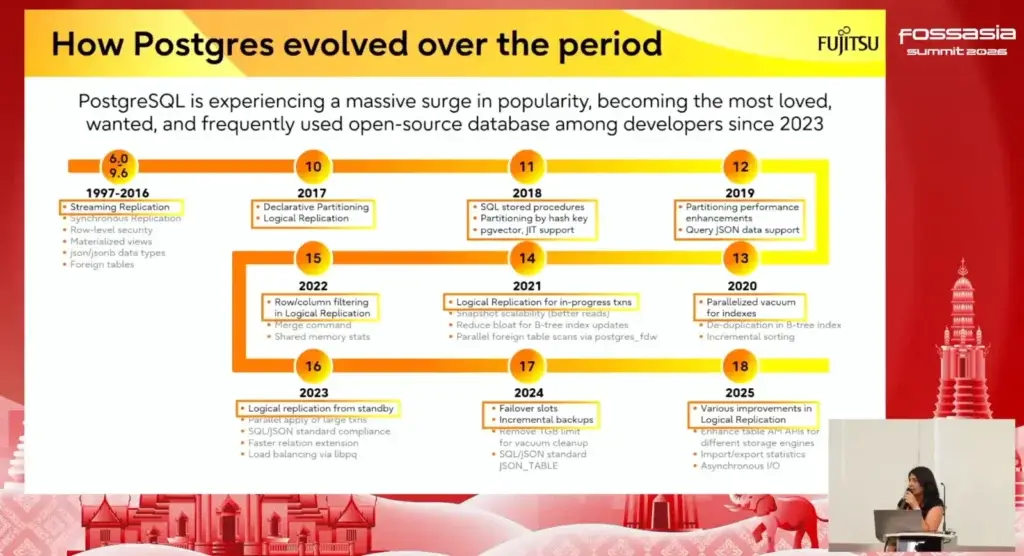
📌 Today: It has become one of the most popular databases and a first-choice for developers worldwide, continuously evolving with new features as shown in the diagram.
📌 How Commercial Organizations Help PostgreSQL
- Direct Funding: Companies (e.g., Percona, AWS, Fujitsu) provide financial support for contributors, conferences, and community events — since the project itself is non-profit.
- Scale Validation: Provide real-world environments and data to test PostgreSQL under diverse, large-scale scenarios.
- Engineering: Contribute software engineers to write code, fix bugs, and bring production experience back to improve the core product.
- Ecosystem Tooling: Develop extensions for backup, monitoring, security, high availability (HA), etc.
- Support: Offer training, best practices, and 24/7 enterprise support to build user confidence.
📌 PostgreSQL Remains Independent
- Governance: Core Team members are chosen via merit-based leadership, not appointed by any single company.
- PGCU (PostgreSQL Community Europe): Manages assets and trademarks to prevent vendor lock-in.
- Permissive License: The PostgreSQL License allows free use, modification, and distribution.
📌 Challenges When Using PostgreSQL in Production
- Operation Support Gaps: Each organization has its own knowledge management and troubleshooting approaches.
- Observability Fragmentation: Scattered monitoring tools make unified visibility difficult.
- Complexity at Scale: Managing large, distributed deployments adds operational overhead.
- Risk Management: Security, supply chain resilience, and compliance require ongoing attention.
📌 Addressing These Gaps
- Community collaboration helps identify and fill these gaps — creating opportunities for new tools and solutions.
- Cloud providers, for example, build managed services to address specific pain points.
- Many other angles exist for innovation and contribution.

📌 Contribution Comes in Many Roles
- User / Operator: Improve documentation & runbooks / share real-world use cases.
- Developers: Submit patches / review code / improve tooling.
- Commercial Organizations: Provide funding / allow employees contribution time.
- Newcomers: Report issues / help improve docs / test features.
Making MySQL Community Stronger
Speaker Peter Zaitsev
📌 MySQL Community Definition: 3 Parts
- Users: Developers, DBAs, etc.
- Contributors: Those who update code and submit patches.
- Vendors: Companies that build commercial products or services around MySQL.
📌 Challenges Facing MySQL
- PostgreSQL Overtaking MySQL: PostgreSQL's popularity has clearly surpassed MySQL since 2023, following Oracle's acquisition.
- Proprietary & Cloud Lock-in: Oracle's closed ecosystem keeps premium features exclusive to their platform.
- Complex Development Process: Contributing code has become difficult; plus, MySQL team resources have been reduced to prioritize Oracle's AI initiatives.
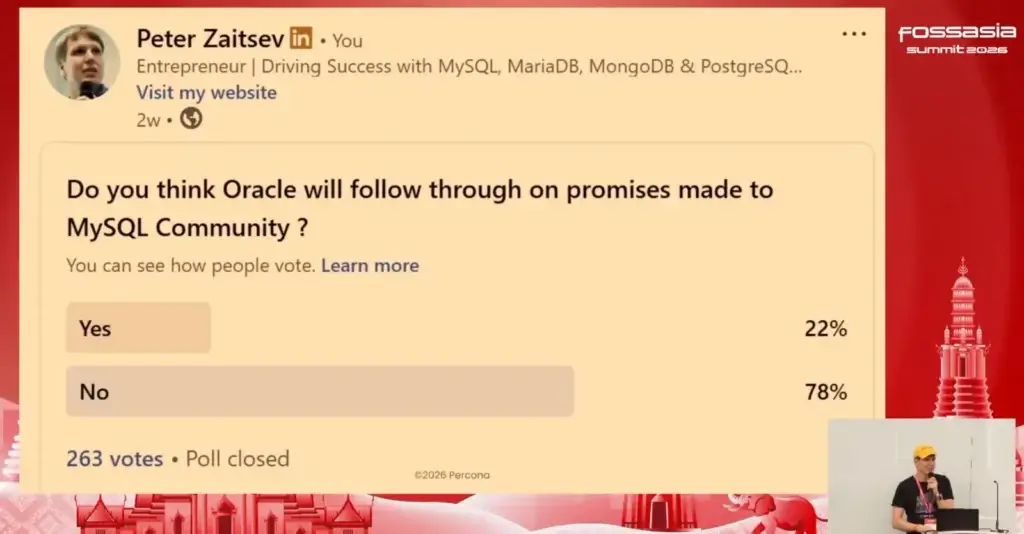
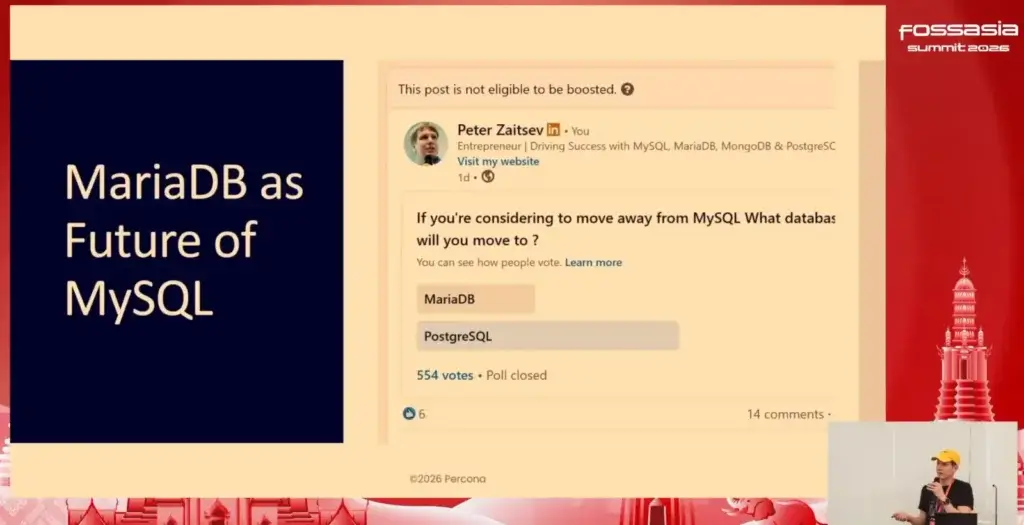
- 2026 Outlook: Oracle has made commitments with a timeline approaching soon — will MySQL stay strong as promised
📌 Future Ideas for MySQL
- Vendor-neutral Association: A PostgreSQL-style model — different from MariaDB, which has both MariaDB plc (commercial) and the MariaDB Foundation (non-profit) working in tandem.
- The Right to Fork: Essential to prevent vendor lock-in. Examples: MariaDB (from MySQL) or Valkey (from Redis).
- Competition: Multiple forks drive innovation — MariaDB's emergence pushed Oracle to invest more in MySQL.
- Ecosystem: Beyond documentation, protocol compatibility matters too — e.g., TiDB or OceanBase reimplement the engine but maintain MySQL protocol compatibility.
- Community: Not the time to relax. We must stay vigilant: will Oracle deliver on its near-term commitments to keep MySQL strong?
- Fit By Use Case: MySQL isn't always the answer. Choose the right tool:
- Need advanced JSON? MySQL here.
- Vector search for AI? Consider MariaDB.
- Massive scale? TiDB might be a better fit.
From Code to Commerce: Open Source Business Models
Speaker Michael Meskes
📌 Open Source Is Not a Business Model
- Open Source is an opportunity to build products faster and eliminate reinventing the wheel — so you can focus on your core business value.
- Examples: Michael Stonebraker (PostgreSQL), Linus Torvalds (Linux), Ian Murdock (Debian), Michael "Monty" Widenius (MySQL), Richard Stallman (GNU) — none of them started with a business model in mind.
📌 Open Source + Business Models (Pre-Cloud Era)
- CD Distribution: Physical media bundling Open Source software — reminds me of old-school Pantip forums!
- Services: Installation, maintenance, best practices, expert support — a quick win for customers who don't want to setup themselves.
- Training + Certification: Validate real expertise and build trust.
📌 Licensing Matters
- Open Source licenses come with various terms and conditions — choose wisely based on your use case (see diagram).
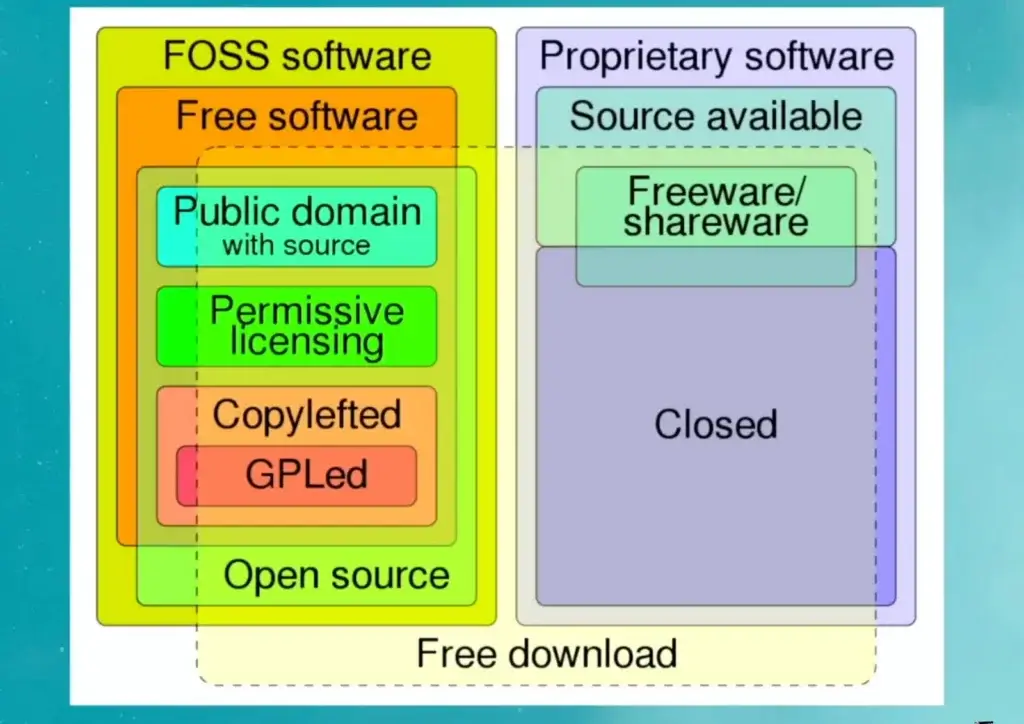
📌 But This Sparks Another Idea
- Open Core Model:
- Core software remains Open Source.
- Proprietary features are sold on top for enterprise customers. - Licensing Spectrum:
- PostgreSQL-style: Fully open — you can use, modify, and redistribute freely.
- Dual License (e.g., MySQL): Free for development, but requires a commercial license for production use + access to premium features. This can make community contributions harder and create friction.
📌 Open Source + Business Models: Cloud + SaaS Era
- SaaS (Software as a Service): Everything managed for the user; subscription-based. Investors value SaaS ~10x more than traditional software houses (~5x) or pure services (~2x) — though AI is currently disrupting this landscape.
- Hyperscalers (Cloud Providers): Often take Open Source projects, optimize them, reduce costs, and resell as:
- Managed Services
- Add-on Features (built on Open Source)
- New Managed Services that mimic Open Source functionality
- License Changes to Prevent Competition: Some projects shifted licenses to deter forks and cloud provider exploitation — e.g., MongoDB, Elasticsearch, Terraform, Redis. History does repeat itself with licensing debates.
Containers & Kubernetes: Made it easier for Open Source to thrive in the Cloud — and often outperform proprietary alternatives (e.g., K8s itself).
Final Thought: The current AI + QA uncertainty feels reminiscent of the dotcom era — especially around licensing. We'll have to wait and see how it unfolds.
Apache Airflow 101 (with Cloud Composer) | Beginner-Friendly Introduction
Speaker Nicha Runglerdkriangkrai
📌 Problems Before Airflow
- Separate Jobs: ETL pipeline tasks (Extract, Transform, Load) often ran independently — at different times or yearly cycles — making them hard to track and coordinate.
- No Unified UI: No single dashboard to visualize the entire workflow status.
- Hard to Troubleshoot: Required manually checking each pipeline to find issues.
📌 What Is Apache Airflow?
- An open-source workflow orchestrator — think of it as a conductor directing musicians (Workers) to play instruments (Operators) following sheet music (Code/DAG).
- Airflow Solves: Visual DAG flows (written in Python) / Clear task status / Easy log tracking.
📌 Airflow Core Components
- DAG (Directed Acyclic Graph): Defines tasks and their execution order/dependencies.
- Scheduler: Decides which task to trigger based on time and dependencies.
- Executor: Determines where to run each task.
- Workers: Execute the actual tasks assigned by the Scheduler.
- Metadata Database: Stores workflow history, status, and configurations.
- Airflow UI: Web interface for monitoring and managing workflows.
📌 How Airflow Works: Data Management Flow
- Scheduler reads DAG files (the plan) and sends instructions to the Executor (team lead).
- Executor assigns tasks to Workers (team members).
- Workers execute tasks, then send status updates to the Metadata Database and logs to Storage.
- Airflow UI pulls this data to display real-time workflow status for users.
📌 Airflow + Cloud Composer
- Managed Service on Google Cloud: Google handles the infrastructure — you focus on writing DAG code.
- Reduced Operational Overhead: No need to manage servers or configure environments yourself.
- Auto-scaling: Worker capacity automatically adjusts based on current workload.
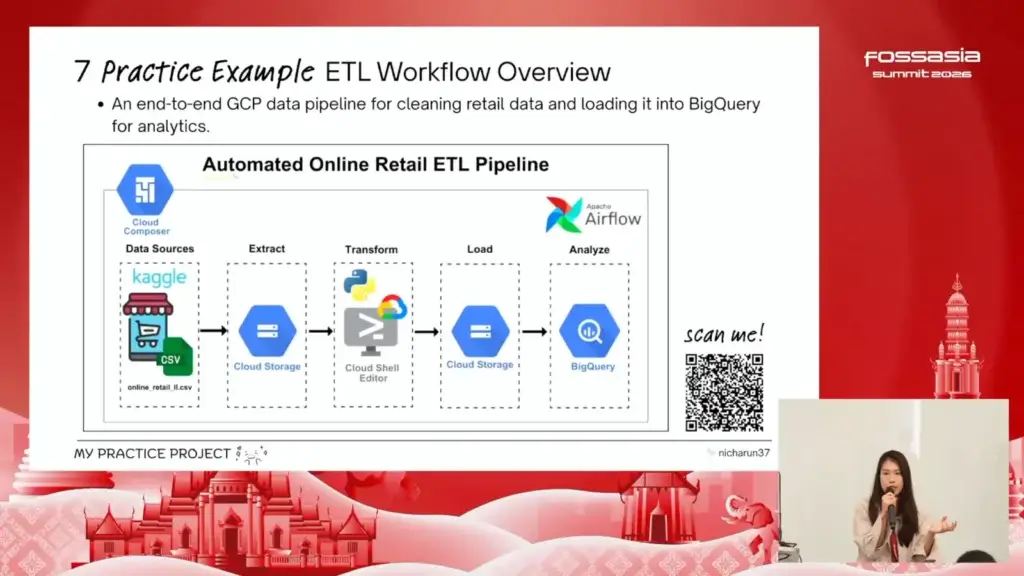
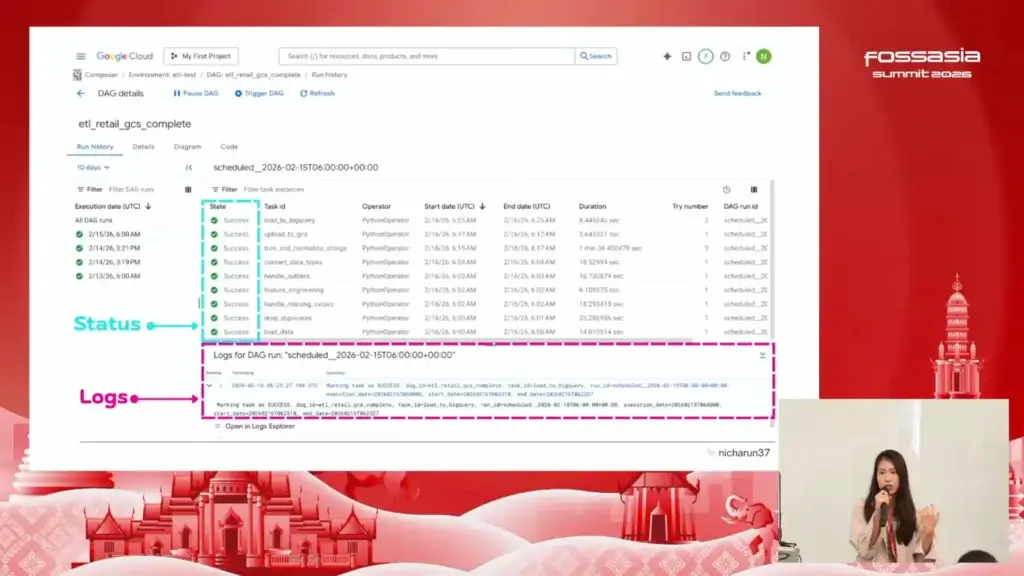
📌Sample Use Case - ETL Pipeline: Example project flow: Pull CSV data → Process with Python → Store in Cloud Storage as Parquet files (smaller & more efficient than CSV) → Load into BigQuery for downstream use.
Lightning Talks Recap (5-6 min each): Quick summaries only — my brain is fried! The afternoon/evening sessions went so fast
Scrum Helper: A Simple Way for Coordinating Open Source Development
Speaker Vedansh Saini
📌 Idea: Scattered Activity Tracking on GitHub/GitLab
- Problem: Activities like commits and PR reviews are scattered across platforms, making progress hard to track.
📌 Solution: Structured Status Reporting Tool
- Structured Reports: Reduce manual summary writing for contributors; help maintainers track work more easily.
- Browser Extension: Works locally, supports GitHub & GitLab, integrates with Gmail for sending reports.
- Future Plan: Add AI + Local Model to auto-categorize commits.
🔗 Repo: https://github.com/fossasia/scrum_helper
Starlog: Open Infrastructure for Language Preservation and Learning
Speaker Chisomo Banzi
📌 Idea: Language Is Identity
- Speaker's vision: Build a tool that goes beyond general language learning — focusing on preserving heritage languages or less commonly taught local languages (e.g., indigenous languages in Taiwan), using visual and spatial memory principles.
📌 Solution: Speakeasy3D Platform Flow
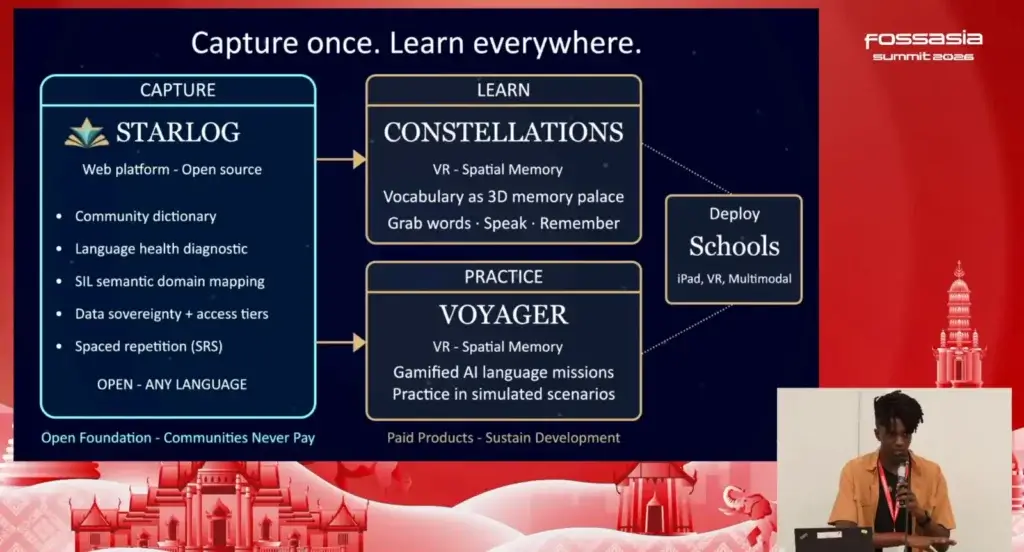
- Starlog (Capture) — Open Source: AI-assisted tool to capture real-life vocabulary, build personal word decks, record native speaker audio, and share with the community.
- Constellations (Learn) — VR via Meta Quest: Transform vocabulary sets into "constellations" in virtual space, leveraging spatial memory to improve retention.
- Voyager / Missions (Practice) — AI Conversation Simulator: Adaptive AI-powered role-play scenarios that scale to learner proficiency — practice speaking in realistic contexts via VR or iPad.
Speakeasy3D = AI + VR + Community-Driven Learning
Building AI-Powered Interactive Maps with Open Data
Speaker Louis Yoong
📌 Idea: Photorealistic Maps + AI for Enhanced User Experience
- Enable features like fly-through camera navigation to data coordinates, or an AI Assistant that answers questions about locations on Traveloka's map.
📌 Solution: Build a System Using
- Google Maps Platform: Photorealistic 3D Maps, Map ID.
- Mapbox: API, MCP Server.
- Open Data: Pull data from geojson.io to connect map markers.
- Gemini + GenKit: Convert natural language prompts into Map Actions.
Voices Across Borders: Building Inclusive Tech Communities
Speaker Shin Thant Tint Tal / Ma. Estella Bravo / Tari / Velia Dang
📌 Focus: Building an Inclusive Tech Community for Everyone
- Sharing experiences of entering the Open Source and Tech world — especially from non-traditional perspectives: students without CS backgrounds (e.g., Business Administration), women in tech, or career-switchers.
- Example: The AirFlow speaker's journey — Electrical Engineering → Data Engineering
AI GP Doctor
Speaker Tari
📌 Idea: Multimodal Medical Diagnosis System
- Build a system that processes medical data from multiple modalities (speech, text, images) and analyzes them jointly to assess patient conditions.
- The system runs iteratively in a loop until reaching a sufficient confidence level before outputting a diagnosis.
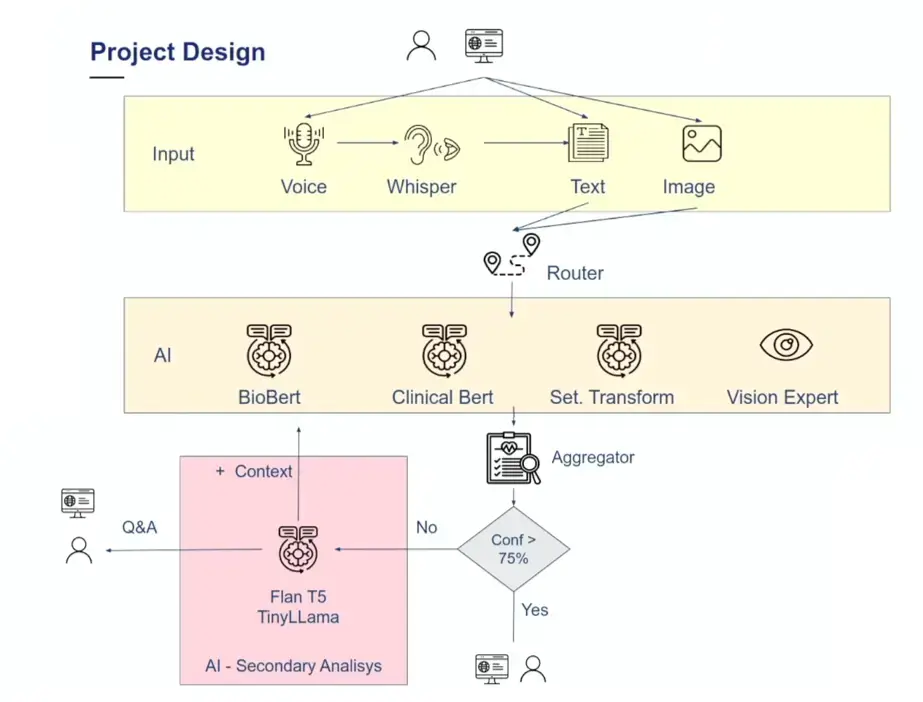
📌 Solution: Ensemble of Specialized Models
- Whisper Model: Convert speech to text.
- BioBERT: Analyze medical text and clinical context.
- Vision Models: Interpret medical images (X-rays, scans, etc.). Combine outputs → Cross-validate → Reach confident diagnosis
Manage Your Call for Speakers, Reviews, Schedule with Eventyay
Speaker Velia Dang
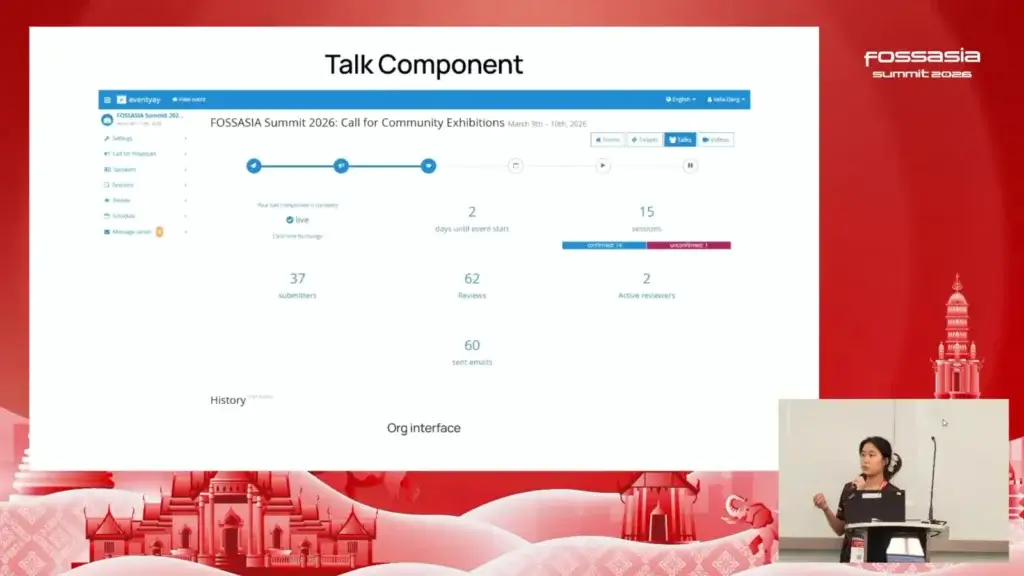
📌 Introducing Eventyay All-in-One: New Features for Conference Organizers
- A complete platform for managing events end-to-end:
- Call for Speakers: Open and manage speaker submissions.
- Session Review Workflow: Handle reviews, feedback, and conflict-of-interest checks.
- Scheduling Simplified: Build and adjust event timetables with ease.
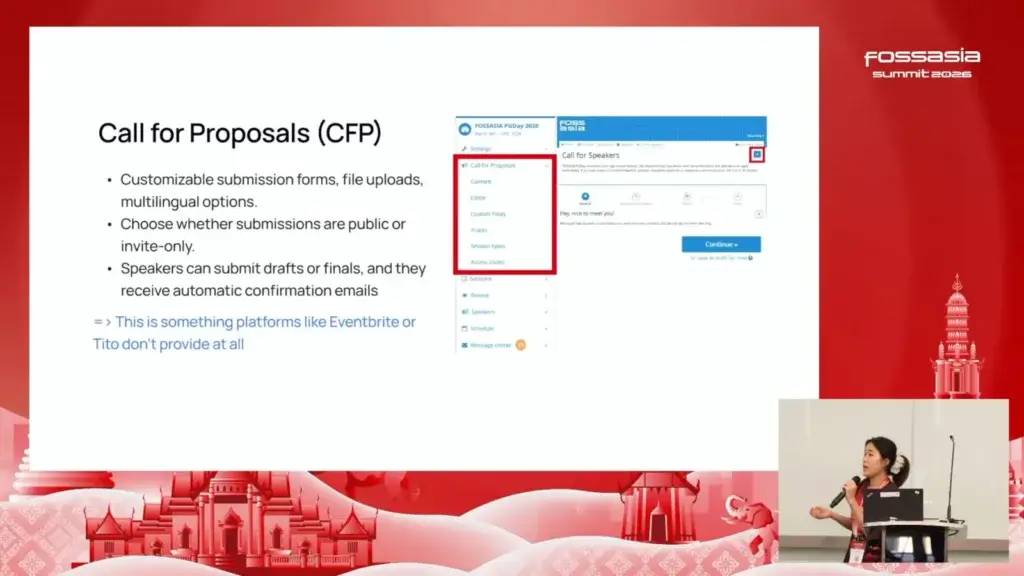
📌 Exclusive Feature: Call for Proposals
- A unique capability not found in other platforms like Eventbrite or TiTo — enabling richer, more flexible proposal management for conferences
📌 Closing Notes
- Originally planned to attend the onsite session "Vibe Coding: Practical AI Workflows for Developers" — but the speaker shared slides + a GitHub repo with a 7B model to try locally instead. My laptop's fans are already spinning up! Will catch the full talk on YouTube later.
- Really wanted to join PGDay too, but have a meeting conflict — will follow up with the team and watch recordings afterward.
- 🙏 Big thanks to the FOSSASIA team for organizing such a great event — and for the excellent live stream!
Reference
- https://eventyay.com/e/88882f3e/schedule?date=2026-03-08
- Live: https://www.youtube.com/watch?v=l6DwkvsqpwE
Discover more from naiwaen@DebuggingSoft
Subscribe to get the latest posts sent to your email.